


Industry deep-dive: industry-woodworking-furniture
Woodworking produces the widest mix of dust of any industry: heavy sawdust and shavings from cutting, fine abrasive sanding dust, and coating overspray. Each needs a different capture point, and the fine fraction is combustible.
How the industry works
- Sawing & ripping — logs and panels become components; this is where most sawdust is made.
- Shaping, planing & routing — moulders, spindle moulders and CNC routers throw shavings and fine particles at high speed.
- Sanding & polishing — belt and edge sanders create very fine, easily suspended dust.
- Edge banding & finishing — heat and adhesive fume mix with airborne dust.
- Assembly & packing — residual dust settles on surfaces, workpieces and machinery.
Where our equipment fits
| Process stage | Our equipment | What it does |
|---|---|---|
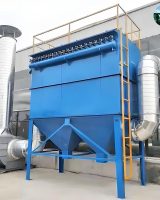
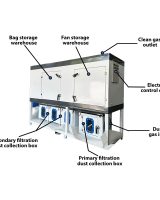
| Machines with hoods and chutes (saws, planers, routers) | Woodworking dust collector or pulse-jet bag filter | Pulls chips and dust away at the source through branch ducting into a central collector, so the shop stays visible and safe. |
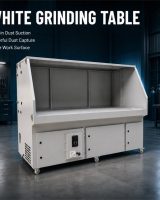
| Fine sanding dust that stays airborne | Cartridge collector with fine filter media | Catches the respirable fraction that a chip collector cannot hold. |
| Roof or machine cyclones on pellet/chip lines | Cyclone separator | Drops heavy material before it reaches the filter, protecting media and recycling shavings to storage. |
| Flammable dust handling | Explosion-relief options and antistatic media | Keeps the collector itself from becoming an ignition source. |
What happens without it
- Fine dust accumulates on rafters, cable trays and inside machines — one spark turns the whole shop into a fuel bed.
- Sanding dust settles on workpieces and finishing lines, so clear-coat quality drops and rework rises.
- Machines draw dust into bearings and motors, shortening service life and increasing downtime.
- Workers breathe the fine fraction; dust-related lung claims are the industry’s biggest compensation risk.
Why our equipment fits this industry
- Collectors are sized from your actual machine list and ducting runs — not from a catalogue guess.
- Combustible-dust options (antistatic bags, explosion venting) are built for NFPA-style risk reviews.
- Shavings and dust return value: separated material can be sold or fed to a biomass line.