

Industry deep-dive: industry-chemical-processing
Chemical processing dust is different in kind, not just degree: it can be toxic at trace levels, explosive under the right conditions, corrosive when wet, or valuable enough to recover. A dust collector here is safety equipment first and housekeeping second.
How the industry works
- Raw material intake & weighing — bag dumping and weigh hoppers release fine powder.
- Reactors & mixing — charging ports and vents release dust, mist and soluble gas.
- Drying & milling — attrition generates fines and can charge them electrostatically.
- Blending & conveying — pneumatic and mechanical conveying pressurises transfer points.
- Packing & laboratory — final filling and QC sampling are common exposure points.
Where our equipment fits
| Process stage | Our equipment | What it does |
|---|---|---|
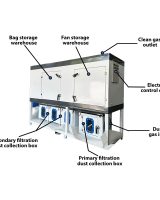
| Weighing, charging and packing stations | Cartridge dust collector | Fine, high-efficiency capture with antistatic media and grounding for combustible powders. |
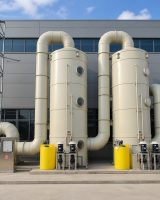
| Acid mist, ammonia and soluble gas | Wet scrubber | Absorbs soluble and reactive components that no dry filter can hold. |
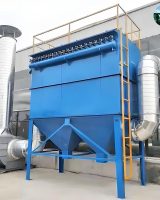
| Process vents and silos | Pulse-jet bag filter | Reliable vent cleaning on silos and reactors with ATEX-style options. |
| QC and development labs | Laboratory fume hood | Contains sampling and small-batch work so it never reaches operators. |
What happens without it
- Toxic dust above occupational exposure limits is a compliance breach and an employee-health liability at the same time.
- Combustible powder in an ungrounded collector is an explosion waiting for an ignition event — the classic chemical-plant incident.
- Corrosive or sticky gas blinds dry media within weeks, driving constant change-outs.
- Fine, expensive product lost to vents is a direct margin loss every shift.
Why our equipment fits this industry
- Antistatic, grounded and explosion-relief configurations are built for combustible-dust risk reviews.
- Wet and dry options let you match each source — not compromise with one machine.
- Media and component choices are specified for the specific chemical, not a generic rating.