


Industry deep-dive: industry-power-waste
Power and waste-to-energy plants handle two very different dust problems. Fuel handling — coal, biomass or refuse-derived fuel — releases combustible dust from the receiving bay to the boiler feed. And flue-gas treatment creates fine ash and reagent dust that must be captured to the strictest limits.
How the industry works
- Fuel receiving & storage — coal or biomass arrives by truck, rail or barge; RDF is stored and handled in enclosed bunkers.
- Fuel preparation — coal crushing, screening and drying; RDF shredding and fluffing release dust and fibrous fragments.
- Conveying & boiler feed — transfer points, day silos and feeders move fuel to the combustion line.
- Flue-gas treatment — dry or semi-dry sorbent injection creates a fine dust load of ash, lime and activated carbon.
- Ash handling & disposal — bottom ash, fly ash and residue transfer and silo storage need contained dedusting.
Where our equipment fits
| Process stage | Our equipment | What it does |
|---|---|---|
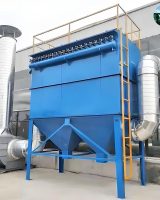
| Coal/RDF crushers, screens and transfer points | Pulse-jet bag filter with explosion-relief options | Captures combustible fuel dust at each source; venting and antistatic media suit the dust class. |
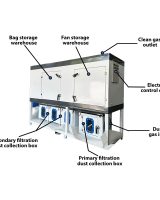
| Boiler house and day-silo vents | Cartridge collector | Keeps silo and feed areas clean with compact, low-maintenance units. |
| Flue-gas dedusting after sorbent injection | Pulse-jet bag filter (with gas conditioning upstream) | Removes ash and reagent dust ahead of the stack; inlet temperature is conditioned to suit the filter media. |
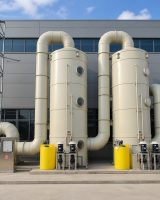
| Waste bunker odour and ammonia slip scrubbing | Wet scrubber | Washes odorous and acidic components from extracted bunker air before discharge. |
| Ash silo vents and residue handling | Bag or cartridge vent filter | Keeps fine ash inside the silo and out of the plant atmosphere. |
What happens without it
- Coal or RDF dust accumulating in the fuel handling area is a standing explosion risk that insurers and regulators will not ignore.
- Fly ash and reagent dust escaping at transfer and silo points coats plant, irritates staff and fails emission spot checks.
- Fuel dust entering electrical and control rooms causes nuisance trips and corrosion.
- Untreated bunker air carries odour across the site boundary, generating community complaints.
Why our equipment fits this industry
- Dust-explosion design, antistatic media and venting options are engineered for your fuel type and risk review.
- High-temperature and gas-conditioning requirements are handled honestly — we tell you what upstream treatment the filter needs.
- Heavy-duty, serviceable designs keep availability high during continuous plant operation.